
Respect, Discipline and the Quiet Art of Staying Grounded
The Quiet Question in the Middle of an Ordinary Day
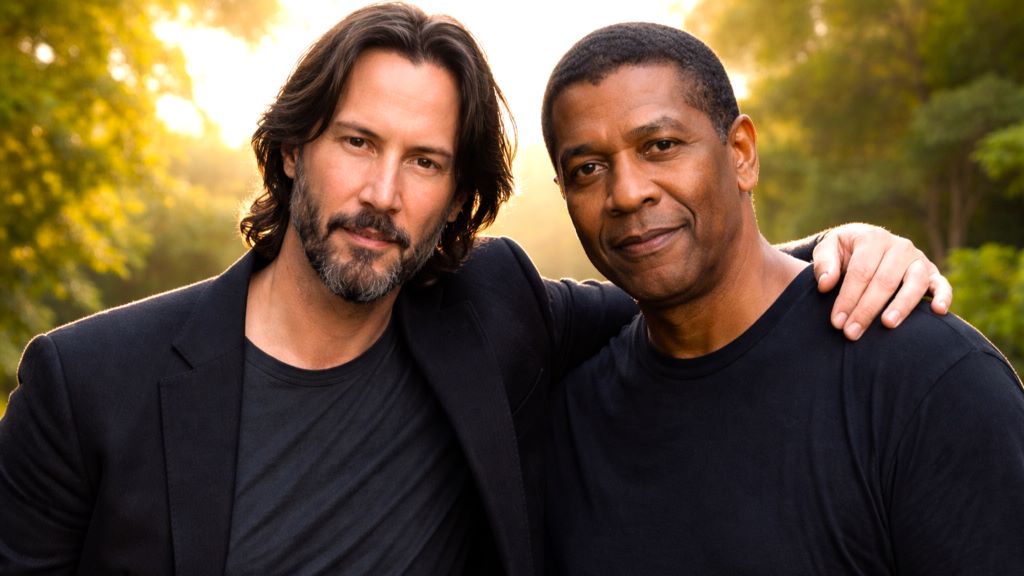
Keanu Charles Reeves and Denzel Washington are often admired not just for their talent, but for how they stay kind and grounded. This reflection explores respect, discipline, pain, and the small daily choices that quietly shape our character.
There’s a quiet kind of question that sometimes appears in the middle of an ordinary day.
Not in a crisis, not in a moment of great success or failure, but in the small pauses in between.
It might come to you when you’re washing dishes, or standing in line somewhere, or scrolling through headlines about people who seem to live on another planet than you. Famous faces, bright lights, big moments. And somewhere inside, a soft question rises:
“How do some people stay kind and grounded when the world gives them every reason not to be?”
I remember having that question one afternoon as I sat with a lukewarm cup of tea, just drifting through videos and interviews. The names were familiar — Keanu Reeves, Denzel Washington — faces I’d seen for years, stories I’d heard in fragments. But that day, I wasn’t paying attention to their movies or awards. I was watching how they spoke. The pauses between their words. The way they treated the people around them, even in short clips.
What struck me wasn’t perfection, or some magical wisdom. It was something much simpler: a steady respect. A quiet discipline. A way of staying grounded even when everything around them seemed built to lift them up and disconnect them from ordinary life.
And I remember feeling a strange mix of comfort and discomfort. Comfort, because it reminded me that it’s possible — possible to stay human even when you’re celebrated. Discomfort, because it forced me to look at myself, at my own much smaller life, and admit that I often struggle to stay humble and kind even when almost no one is watching.
That’s where this reflection begins: with that gap between what we admire in others and what we practice in ourselves.
From Straight-Line Success to Life’s Quieter Plan
I grew up believing, like many people, that life was a straight line of achievement. Study hard, work hard, succeed — and success would somehow answer everything. It would give confidence, ease the doubts, fix the insecurities. Respect would come from the outside, and that would heal something on the inside.
But life, as it usually does, had a quieter plan.
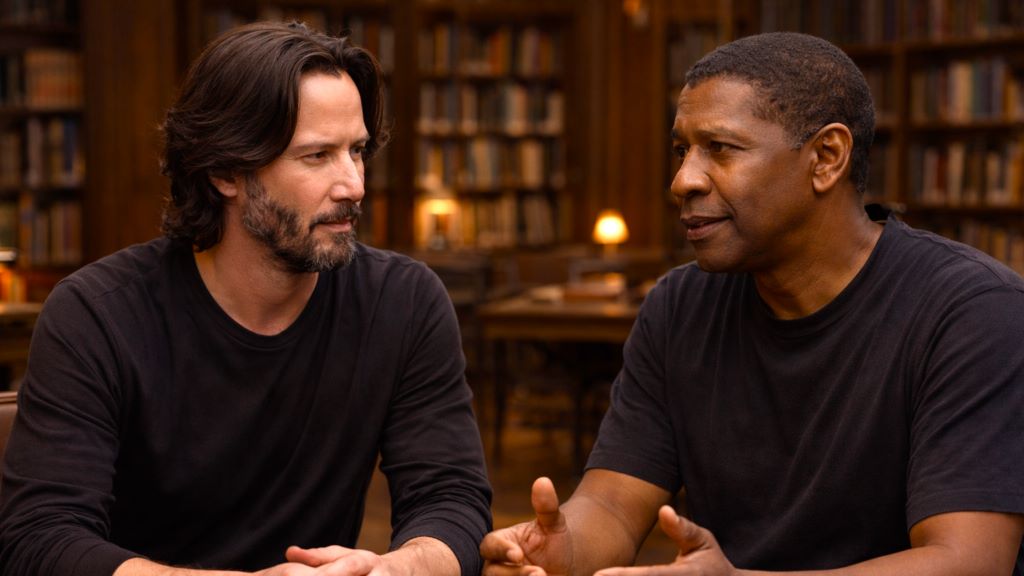
My early adult years didn’t look like a movie. They looked like long commutes, a job that paid the bills but didn’t feed the soul, evenings spent wondering if I’d somehow missed the path that everyone else seemed to be on. I remember watching interviews of people like Denzel Washington talking about purpose, discipline, faith, and responsibility. I heard Keanu Reeves speak gently about grief, kindness, and staying low‑key despite fame. And I felt a distance between their words and my reality.
They seemed to live in another world — yet somehow their values felt closer to what I longed for than anything around me.
The Workplace Mirror: Ambition, Image and Insecurity
At work, I saw a different picture. Competition dressed up as ambition. People slowly shaping their personalities to fit whatever got them ahead. Compliments traded like currency, kindness used as a tactic rather than a truth. I don’t say this as a judgment on anyone else — I saw it in myself too.
Whenever a tiny bit of praise came my way, I held onto it longer than I should have. I replayed it, tried to stretch it into something that could hold up my shaky sense of self-worth. And when criticism appeared, even if it was small, it cut too deep, as if it had found a place in me that was already fragile.
One evening, after a strange, heavy day at work, I found myself walking home slower than usual. I’d just been congratulated on a project, given a brief mention in a company email, and for a few minutes it felt good. Then, almost immediately, I felt something else: fear of losing it. Fear that the next time, people wouldn’t be impressed. Fear that without that external nod, I might shrink back into feeling like nobody.
As I walked, a question floated through my mind, almost annoyingly simple:
“If this small amount of attention can shake you this much, what would happen if you had more of it?”
It’s funny how sometimes we look at very famous people and assume their challenge is completely alien to us. But in that moment, the gap closed a little. The scale was different, but the inner struggle felt oddly similar: how do you stay grounded when your identity starts to attach itself to how others see you?
Learning from Denzel and Keanu: When Wisdom Becomes a Mirror
That night, I went home and ended up watching a quiet interview with Denzel Washington. He wasn’t promoting anything. He was just talking about how he sees life — about putting God first, about the importance of discipline, about respecting everyone on set, from the lead actor to the crew member nobody sees in the credits.
He said something simple, in his calm, steady way: that talent will get you in the room, but character is what keeps you there. It wasn’t new wisdom, exactly. I’d heard versions of it before. But that night, in that tired state, it felt less like a quote and more like a mirror.
I realized I’d been chasing rooms to get into: recognition, progress, approval. But I rarely stopped to ask: “And when I’m there, who am I actually being? Do I respect others when I have nothing to gain from them? Do I show discipline only when someone is watching, or also when no one will ever know?”
Around the same time, I came across old clips of Keanu Reeves. Stories people told about him sitting with the crew, giving away his seat, speaking gently with strangers, treating people not as stepping stones but as fellow travelers. Again, I know public images are never the whole truth. Lives are more complex than interviews and stories. But there was a consistency in the way people described him: kind, humble, thoughtful.

It wasn’t about perfection. It was about direction. About where a person chooses to stand when they could easily rise above everyone else.
And I began to wonder, very honestly: “In my own small life, where do I stand? When I get a little power, a little advantage, a little praise — do I use it to connect, or to separate?”
Inner Change: Slow Shifts, Not Instant Transformations
I’d love to say that from that moment on, I changed. That the wisdom of others flowed into me and everything was different. But inner changes rarely work like that. They don’t flip a switch. They slowly influence what we pay attention to.
Over the next months, I discovered that “discipline” and “respect” are not grand words. They are very small ones. They show up in tiny, almost invisible ways.
What Discipline Really Looks Like in Everyday Life
Discipline became:
– Showing up on time, even when no one will call me out for being late.
– Finishing a task with care, even when it’s boring or beneath my expectations.
– Turning off distractions when I said I would, not because someone told me to, but because I told myself I would.
The Everyday Face of Respect
Respect became:
– Listening when someone spoke, without planning my reply while they were still talking.
– Thanking the receptionist, the cleaner, the delivery person — not as a performance, but from an honest sense that their day matters too.
– Not laughing at the easy joke that puts someone else down, even if the room seems to approve.
These are not cinematic actions. No music plays in the background, no audience applauds. But slowly, something shifts inside. A kind of inner steadiness begins to form.
What I was learning, almost against my own impatient nature, is that staying grounded is not a feeling you wait for. It’s a practice you return to.
Inspired by people like Denzel Washington, I began to see discipline not as punishment, but as a form of respect — for myself, for my time, for my potential, and for others who trusted me. Inspired by what I’d observed in Keanu Reeves, I started to think about how to move through the world a little more quietly, leaving people a little better than I found them, even in brief encounters.
A Small Bus Story: When Admiration Turns into Action
One small moment stands out, not because it was big, but because it was so ordinary.
I was on a crowded bus, tired after a long day. A woman got on, holding a child, clearly exhausted. People saw her, noticed her, and looked away. I felt that tiny inner conversation start up: “You could stay seated, you’re tired too. Someone else will surely get up.” For a few seconds, I hesitated.
Then I thought of all the times I admired kindness in strangers from a distance but didn’t join in. I stood up and offered my seat. She smiled, said thank you in a soft, almost embarrassed voice. No one clapped. No one posted about it. But as I held onto the overhead rail and swayed with the motion of the bus, I felt a quiet alignment inside: this, too, is the life you say you admire in others. These little choices.
Respect is not a speech; it’s a seat offered, a phone put away while someone talks, an apology given without excuses.
When Life Breaks Open: Groundedness as Survival
At some point, another layer of understanding began to unfold.
It’s easy to talk about respect and discipline when things are going reasonably well. But life doesn’t stay smooth. Loss comes. Disappointment arrives. Plans unravel. And it is in those seasons that staying grounded becomes less about manners and more about survival.
I went through a period when several parts of my life broke open at once. A relationship ended, a project I had attached my hopes to fell apart, and some old grief I thought I’d moved past came back with unexpected force. On the outside, nothing dramatic was visible. I still went to work, still replied to messages, still met deadlines. But inside, things felt heavy and disorganized, like someone had pulled the floor from under me.
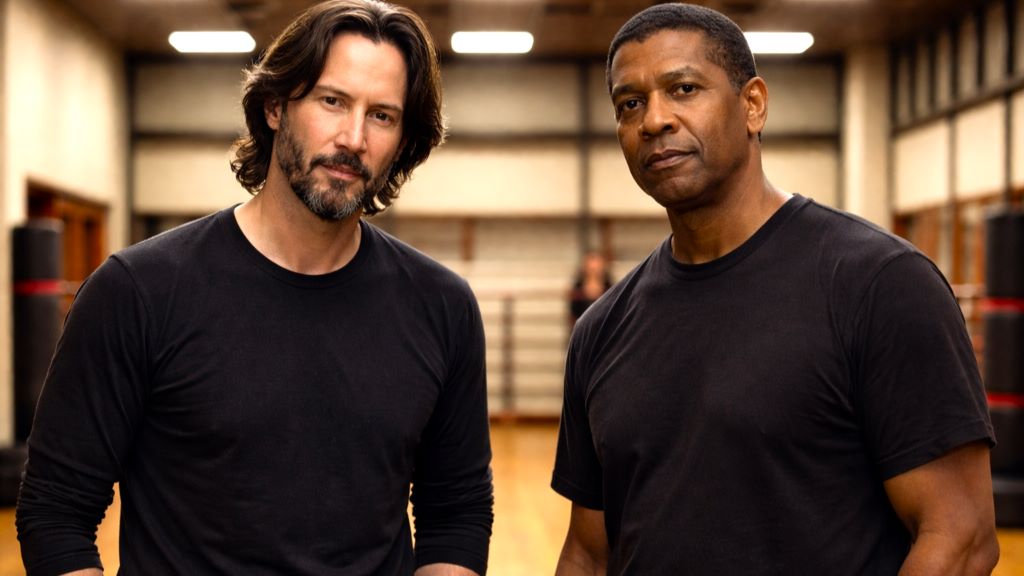
It was around then that I thought more deeply about something else I’d heard from both Denzel Washington and Keanu Reeves in different ways: the role of pain, loss, and struggle in shaping who we are.
Keanu has spoken, in his own simple, unpolished way, about grief and hardship in his life — never as a spectacle, never in detail for attention, but with a kind of quiet acceptance that pain is part of being human. Denzel has often talked about falling down, about failure, about how you get back up and what you lean on when you do.
None of them sell a fantasy of a life without suffering. Instead, they point toward something more real: that staying grounded includes acknowledging your wounds without letting them define your worth.
Learning to Respect Your Own Pain
For me, during that difficult season, respect took on a new direction: respecting my own pain, instead of dismissing it. I had always been quicker to offer compassion to others than to myself. When friends struggled, I saw their humanity clearly. When I struggled, I called it weakness.
But slowly, through reflection, prayer, journaling, and honest conversations, I began to understand that staying grounded also means staying honest. Not pretending to be strong, not hiding every tear, not demanding constant productivity from a hurting heart.
Discipline, in that phase, became less about schedules and more about gently holding onto small, healthy routines: getting out of bed, taking a walk, answering a message, eating properly, going to sleep at a decent hour. It didn’t look impressive. There were no inspirational quotes to be made from it. Yet these were the threads that kept me connected to life when emotions tried to pull me inward and isolate me.
I remembered one thing Denzel Washington said about putting your slippers far under the bed, so that when you wake up, you have to get on your knees to reach them — and while you’re there, you might as well thank God for what you have. Whether or not one shares his faith, there is something powerful in that simple ritual: a daily act of humility.
So I created my own small rituals. Not dramatic, not visible. Just regular moments of reconnecting myself to something steadier than my moods: a few quiet minutes of gratitude in the morning, a moment of stillness before sleep, a habit of noticing at least one kind thing in the world each day, even on the hardest days.
These practices didn’t erase the pain. But they kept me from losing myself in it.
Groundedness Is Built Through Small, Repeated Choices
Over time, I began to see that “staying grounded” is not one big decision. It’s many small choices, made again and again, often without witnesses.
It’s the choice to stay kind when you’re tired.
The choice to admit when you’re wrong.
The choice to keep learning instead of assuming you already know.
The choice to see people as people, not as roles or obstacles.
It’s also the choice to measure your worth by something deeper than public approval. To recognize that applause can feel good, but it doesn’t necessarily tell the truth about your character. And silence from others doesn’t diminish the value of the quiet, honest work you do in a day.
Watching the public lives of people like Keanu Reeves and Denzel Washington from a distance, with a reflective mind and without idolizing them, I’ve come to a gentle conclusion: what we admire most in them is not something that belongs only to them. It is something we are all invited to practice, in our own way, in our own scale.
The Everyday Stage We All Stand On
We may never stand on a stage, or appear on a screen, or receive awards. But every day, we stand in front of someone: a colleague, a friend, a stranger, a family member, or even just the mirror. In those moments, the same questions quietly apply:
Will I respect this person’s humanity?
Will I choose discipline over easy escape?
Will I stay grounded in what I believe is right, even when there is no audience?
The older I get, the more I realize that the real “greatness” we should aspire to has very little to do with being known, and everything to do with being real. Being consistent. Being sincere.
There is a calm strength in a person who knows who they are, who doesn’t need to prove it loudly, who understands that status is temporary but character is something you build, slowly, over a lifetime.
Fame can amplify who you already are, but it cannot give you what you do not cultivate in quiet places.
Returning to the First Question — With a Clearer Answer
Sometimes, when life feels noisy — with its endless opinions, its comparison, its constant reminders of who is achieving what — I go back to that simple, unsettling question that came to me years ago: “How do some people stay kind and grounded when the world gives them every reason not to be?”
And the answer, at least for me, is no longer a mystery belonging only to celebrities or extraordinary people. It is something much more ordinary, and therefore more reachable.
They stay grounded by remembering where they came from, who they serve, and what truly matters when the lights go off and the crowd goes home.
They practice discipline not as a prison, but as a path — a way to honor their gifts, keep their promises, and respect the opportunities life has given them.
They show respect not only upward, to those who can benefit them, but sideways and downward, to those who are often overlooked. They understand that no job is small when it contributes to the whole, and no person is unimportant.
And they accept that pain, failure, and loss are not signs that life has rejected them, but ingredients that can deepen their compassion if they let them.
All of this, I have come to believe, is available to each of us, in our own settings: in offices and classrooms, in homes and buses and sidewalks, in online interactions and quiet kitchens. We do not need bright lights to practice profound values.
What True Success Really Means
In the end, respect, discipline, and staying grounded are not performances. They are quiet agreements we make with ourselves:
To treat others with dignity.
To make small, honest efforts, even when no one is watching.
To remember that we are neither the center of the universe nor insignificant — simply part of a shared human story, where everyone is carrying something unseen.
If there is one soft insight that has settled in me through all these reflections, it is this:
A truly successful life is not measured by how high you rise, but by how deeply you remain rooted in your humanity while you climb — and how gently you walk back down when you need to.
Fame fades. Applause ends. Achievements age. But the way you made people feel, the quiet discipline with which you lived, and the respect you showed to yourself and others — those remain, sometimes long after your name is forgotten.
And perhaps, in the quiet spaces of our ordinary days, that is enough.